Back pain is one of the most common reasons people seek medical attention worldwide. In a bustling city like Bangalore, where long commutes and sedentary desk jobs are the norm, spinal issues are increasingly prevalent. For many, the mere mention of “spine surgery” triggers immediate anxiety. The common fear is that surgery is a “point of no return” or that it is the only solution for chronic back pain relief.
However, the truth is that the vast majority of spinal conditions—nearly 90%—can be managed successfully without ever entering an operating theater. At Rao Ortho Clinic, led by Dr. Ajay Rao, our philosophy is “conservative first.” But how do you know when you’ve crossed the line from manageable discomfort to a situation where surgery is the only safe option?
This comprehensive guide will explore the spectrum of non-surgical spine treatments and highlight the “Red Flag” symptoms that indicate it is time to consult a specialist.
The Power of Conservative Management: Non-Surgical Spine Treatment
Before discussing surgery, it is vital to understand the arsenal of non-surgical options available. Most patients experiencing a herniated disc, sciatica, or degenerative disc disease find significant relief through a structured 6-to-12-week conservative program.
1. Advanced Physiotherapy and Core Strengthening
Physiotherapy is the cornerstone of chronic back pain relief. It’s not just about heat packs; it’s about mechanical diagnosis. By strengthening the “core” muscles (the abdominals and deep spinal muscles), we create a “natural brace” for the spine, taking the pressure off the vertebrae and discs.
2. Pharmacotherapy
Modern pain management involves more than just simple painkillers. Nerve-stabilizing medications and targeted anti-inflammatories can reduce the chemical irritation of the nerve roots, allowing the body’s natural healing processes to take over.
3. Targeted Spinal Injections
When oral medications aren’t enough, epidural steroid injections or nerve blocks can deliver powerful anti-inflammatory agents directly to the source of the pain. This can often “reset” the pain cycle, providing a window of comfort during which the patient can engage more effectively in physical therapy.
Expert Insight: We aim to manage symptoms while the body undergoes “resorption”—a process where the body naturally shrinks a herniated disc over time. Surgery is only considered when this process fails or the nerves are at risk.
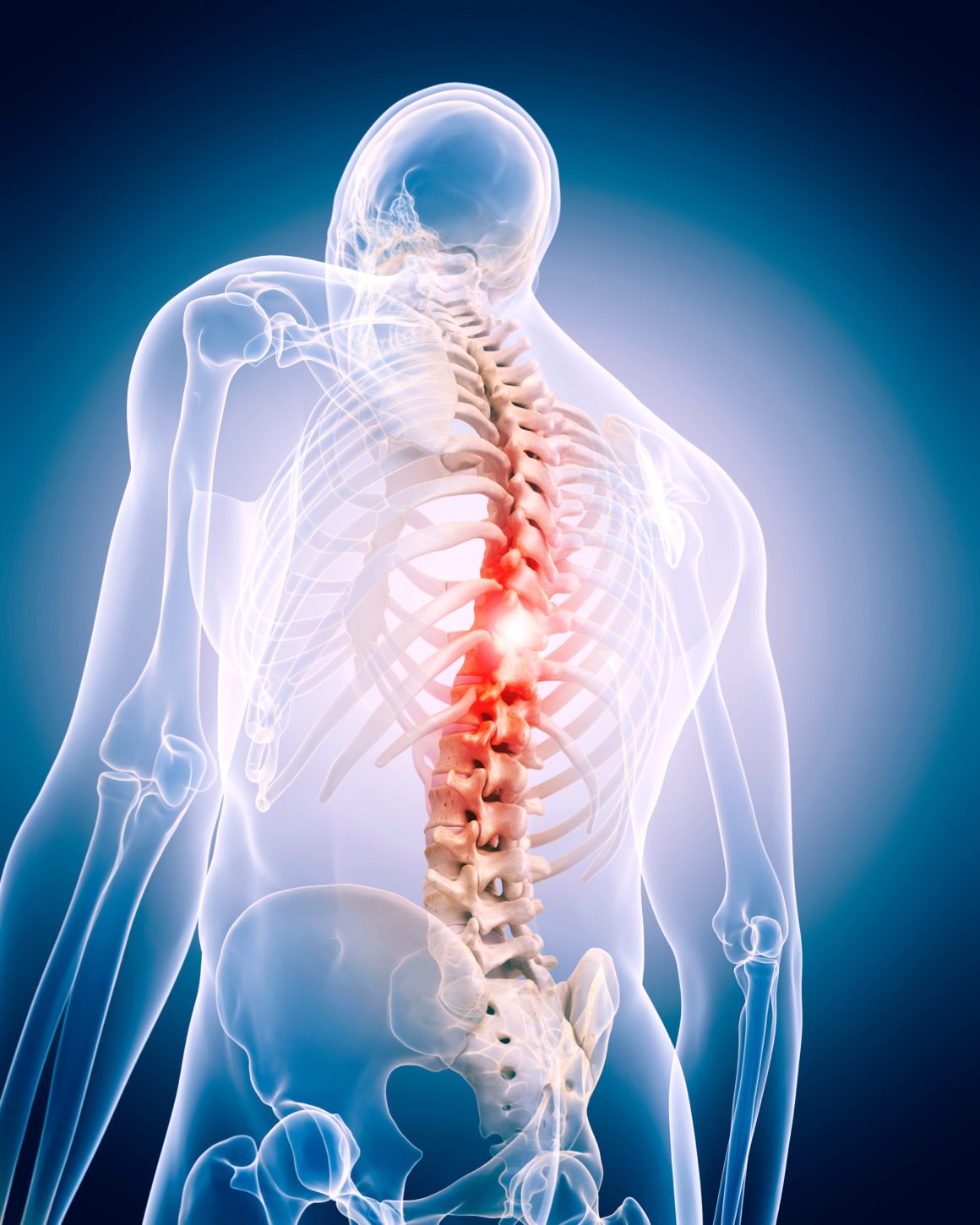
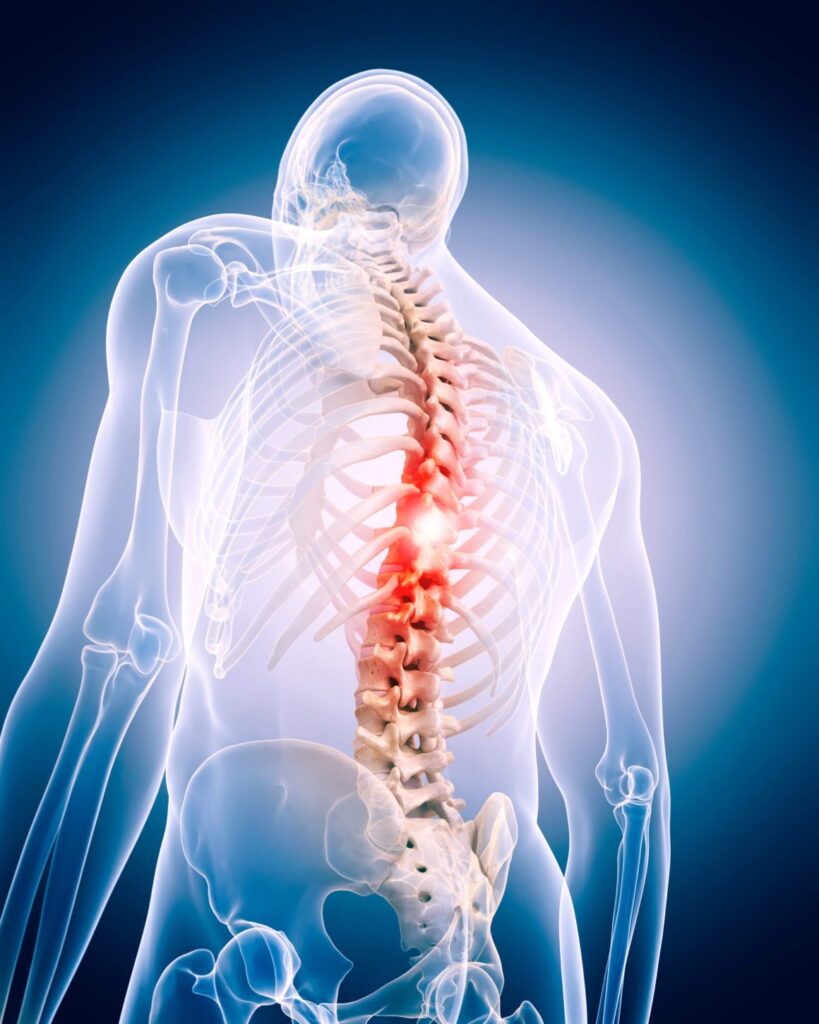
3d rendered, medically accurate 3d illustration of the painful spine
When to See a Spine Surgeon: The 5 Red Flags
While patience is a virtue in spinal care, there are specific clinical markers where waiting too long can lead to permanent nerve damage. If you are experiencing any of the following, it is time to seek a surgical consultation.
1. Loss of Bladder or Bowel Control
This is the most critical emergency in spinal care, known as Cauda Equina Syndrome. If you suddenly experience an inability to urinate, loss of bowel control, or “saddle anesthesia” (numbness in the areas that would touch a horse’s saddle), seek emergency care immediately. Delay can lead to permanent paralysis or incontinence.
2. Progressive Muscle Weakness
There is a significant difference between pain and weakness. Pain is subjective, but weakness is a physical sign that the nerve’s electrical signal is being cut off. If you are “foot dropping” (tripping over your toes) or losing the ability to grip objects, the nerve is being compressed to a point where its function is dying.
3. Refractory Pain That Prevents Daily Life
If you have exhausted all non-surgical spine treatments and your pain remains at an 8/10 or 10/10, surgery becomes a quality-of-life decision. When you can no longer perform your job or sleep for more than two hours at a time, the surgical risks are often outweighed by the benefit of returning to a functional life.
4. Persistent Numbness and “Pins and Needles”
Sensory loss is often the precursor to motor loss (weakness). Persistent numbness in the legs or arms suggests that the sensory fibers of the nerve are under constant mechanical pressure. If this numbness is expanding or becoming constant, a specialist needs to evaluate the degree of stenosis (narrowing) in your spinal canal.
5. Spinal Instability or Deformity
In cases like Spondylolisthesis (where one vertebra slips over another), the spine may become structurally unstable. If the bones are moving in a way that threatens the spinal cord, “fusion” surgery may be required to stabilize the architecture of your back.
The Modern Approach: Minimally Invasive Spine Surgery
If you do fall into the category of needing surgery, the good news is that modern techniques prioritize rapid recovery. At Rao Ortho Clinic, we focus on:
Microdiscectomy: Using high-powered microscopes to remove only the portion of the disc pressing on the nerve through a tiny incision.
Endoscopic Spine Surgery: The “keyhole” approach, resulting in minimal blood loss and often allowing patients to go home the same or next day.
Rapid Rehabilitation: Most spine patients in Bangalore are back on their feet within 24 hours of the procedure.
Conclusion: Trusting Your Body and Your Specialist
The journey to chronic back pain relief is rarely a straight line. It requires a partnership between the patient and a specialist who understands both the biomechanics of the spine and the personal needs of the individual.
If you are experiencing back pain, don’t live in fear of surgery, but don’t ignore the warning signs either. Early intervention is the key to maintaining your mobility for life.
About Dr. Ajay Rao Dr. Ajay Rao is a leading Orthopaedic Surgeon in Bangalore with over 25 years of experience. Specializing in joint replacement and spine care, he consults at Rao Ortho Clinic (Basaveshwar Nagar) and Navachethana Hospital (Yelahanka).