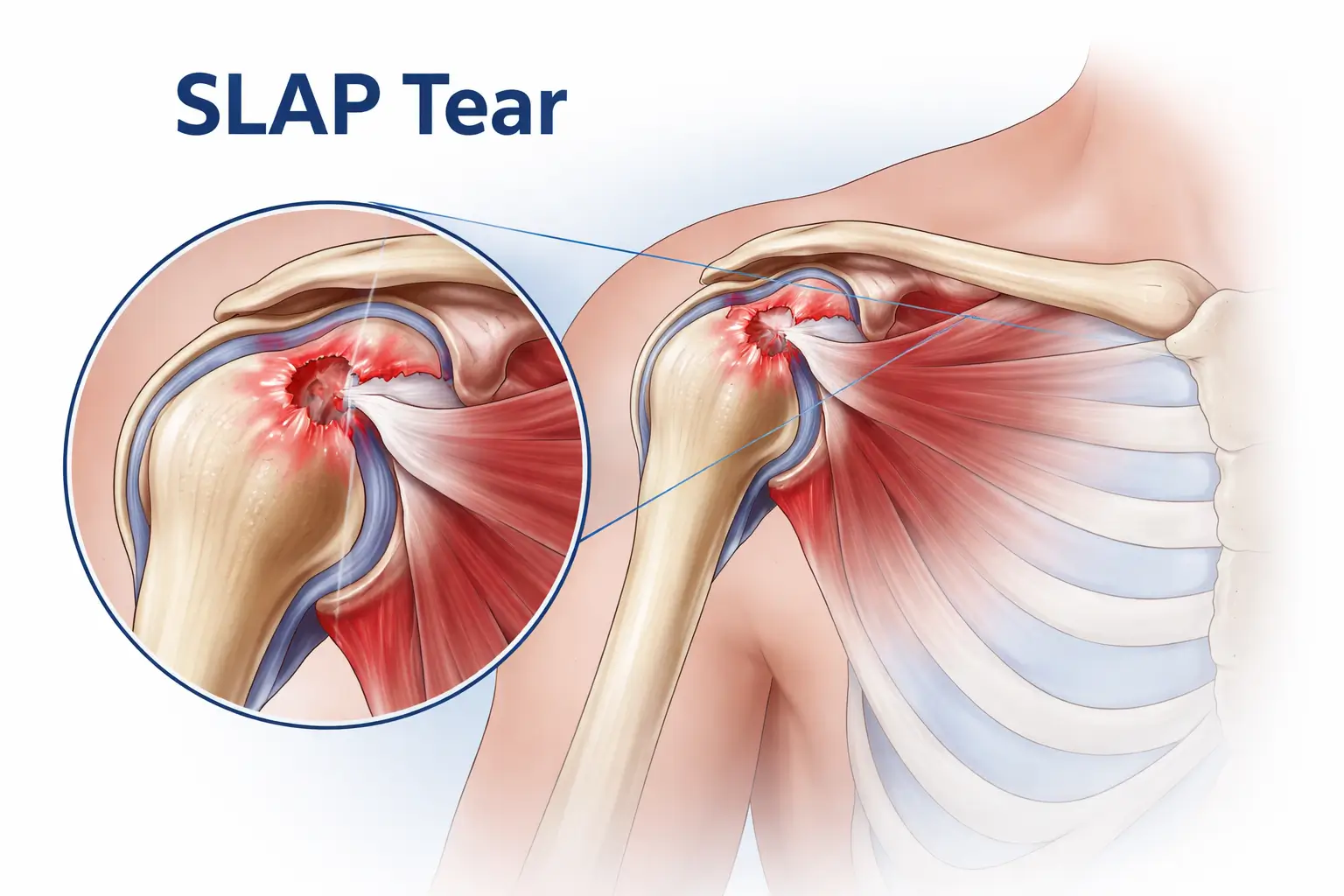
If you’ve recently been diagnosed with a SLAP tear (Superior Labrum Anterior to Posterior), your first thought might be, “When is my surgery date?” For years, surgical reattachment was the “gold standard” for anyone with a labral injury. However, orthopedic medicine has evolved significantly. Today, surgeons and physical therapists alike are finding that many patients—including athletes—can return to 100% function without ever stepping into an operating room.
In this guide, we will break down SLAP tear grades, explore the effectiveness of non-surgical treatment for SLAP tears, and help you identify when healing a labrum without surgery is a realistic goal.
Understanding SLAP Tear Grades: Not All Tears are Equal
Before deciding on a treatment path, it is crucial to understand exactly what happened inside your shoulder. The labrum is a ring of tough, fibrous tissue that stabilizes the shoulder joint. SLAP tears are categorized into four primary grades (or types), and the grade is the biggest predictor of whether you need surgery.
- Grade (Type) I: This involves fraying of the superior labrum, but the tissue remains firmly attached to the bone. This is often a result of aging and is almost always treated non-surgically.
- Grade (Type) II: The most common type. The labrum and the biceps tendon anchor pull away from the bone. While common in athletes, many Type II tears respond exceptionally well to physical therapy.
- Grade (Type) III: A “bucket-handle” tear where the torn labrum hangs into the joint, but the biceps tendon remains stable. This often causes “locking” or “catching” sensations.
- Grade (Type) IV: The tear extends into the long head of the biceps tendon. This usually causes significant instability and is more likely to require surgical intervention.
The Case for Non-Surgical Treatment for SLAP Tears
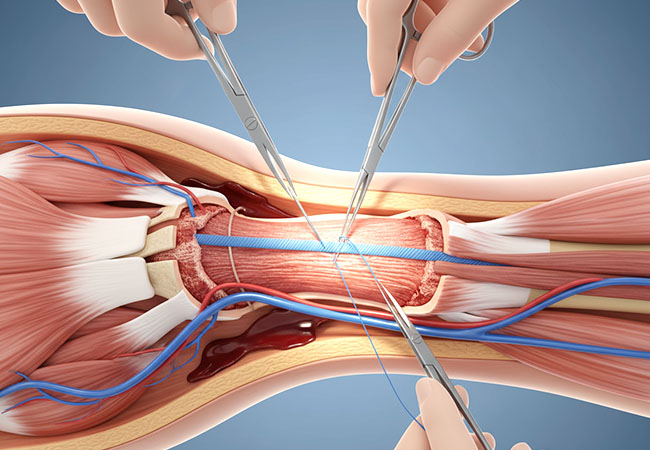
There is a growing body of research suggesting that for many, surgery is no more effective than high-quality physical therapy. A notable study published in the British Journal of Sports Medicine found that patients who underwent “sham surgery” (placebo) reported similar improvements to those who had actual SLAP repairs.
Why is this? The shoulder is a complex system of muscles. Even if the labrum is torn, the surrounding muscles—specifically the rotator cuff and the scapular stabilisers—can be trained to compensate for the lost stability.
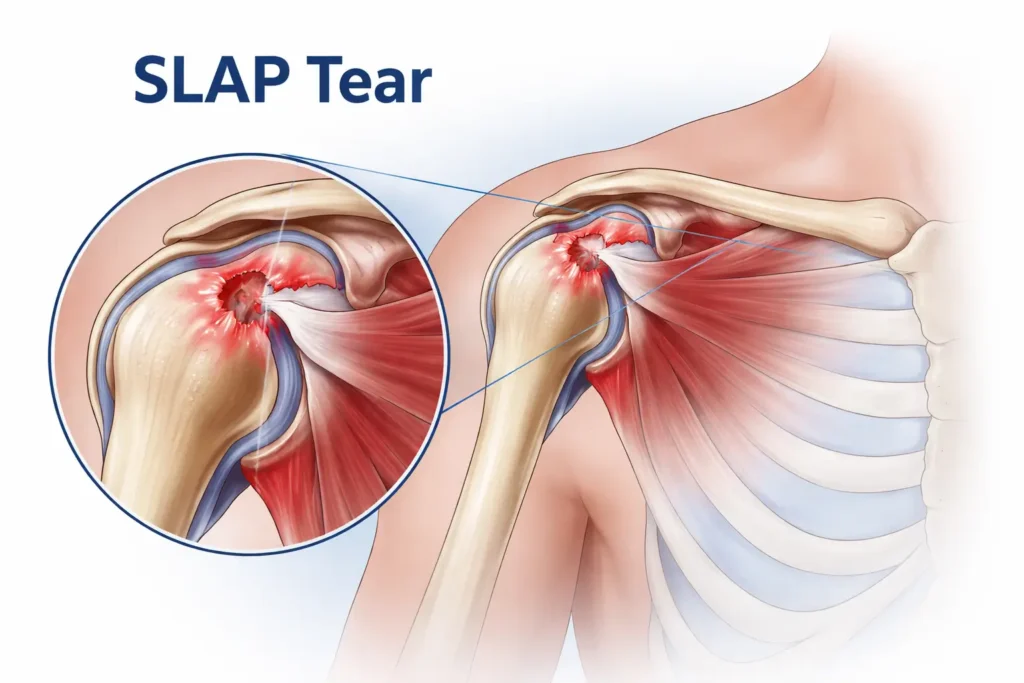
Who is a Good Candidate for Non-Surgical Healing?
- Middle-aged or older individuals: If your tear is degenerative (wear and tear) rather than acute (a sudden fall), surgery is rarely the first choice.
- Low-demand patients: If your daily life doesn’t involve heavy overhead lifting or competitive pitching.
- Grade I and stable Grade II tears: When the biceps anchor is still relatively functional.
How Physical Therapy Heals a Labrum Without Surgery
When we talk about “healing” a labrum without surgery, it’s important to be honest: a deep tear in the cartilage may not physically “knit” back together because the labrum has poor blood supply. However, you can achieve functional healing. This means the pain goes away and the shoulder performs perfectly because the muscles are doing the work the labrum used to do.
A typical physical therapy protocol for a SLAP tear focuses on three pillars:
1. Posterior Capsule Stretching
Many SLAP tear patients suffer from GIRD (Glenohumeral Internal Rotation Deficit). This means the back of the shoulder is too tight, which pushes the “ball” of the joint forward and upward, aggravating the tear. Stretching the posterior capsule reduces this pressure.
2. Rotator Cuff Strengthening
The rotator cuff (supraspinatus, infraspinatus, teres minor, and subscapularis) acts as the primary stabilizer of the shoulder. By strengthening these muscles, you keep the humerus centered in the socket, preventing the “clunking” associated with labral tears.
3. Scapular (Shoulder Blade) Stability
The shoulder blade is the foundation of the shoulder. If your shoulder blade doesn’t move correctly (scapular dyskinesis), it puts massive strain on the labrum. Exercises like “Rows,” “I-Y-Ts,” and “Wall Slides” ensure the foundation is solid.
The Timeline: How Long Should You Try Physical Therapy?
Most orthopedic guidelines suggest a minimum of 3 to 6 months of dedicated physical therapy before considering surgery.
- Weeks 1–4: Focus on reducing inflammation through rest, ice, and gentle range-of-motion work.
- Weeks 4–12: Progressive strengthening of the rotator cuff and scapular muscles.
- Months 3–6: Return to sport-specific movements or heavy lifting.
If, after 6 months of consistent work, you still experience “mechanical symptoms” (locking, catching, or giving way), then a consultation with a surgeon is the logical next step.
When Surgery is Unavoidable
While physical therapy is powerful, it has limits. Surgery might be necessary if:
- Acute Trauma: You are a young athlete who suffered a complete tear due to a sudden dislocation or accident.
- Mechanical Interference: A piece of the labrum is physically caught in the joint, preventing movement.
- Failed Conservative Care: You’ve completed 6 months of PT with zero improvement in pain or stability.
- Grade IV Tears: Where the biceps tendon is significantly compromised.
Pros and Cons: PT vs. Surgery
| Feature | Physical Therapy (Non-Surgical) | SLAP Repair Surgery |
| Recovery Time | 3–4 months to full activity | 6–9 months to full activity |
| Risk | Virtually zero | Infection, stiffness, nerve damage |
| Cost | Relatively low | High (Surgery + Post-op PT) |
| Success Rate | High for Grades I & II | High for athletes with unstable tears |
Your Action Plan
If you have been diagnosed with a SLAP tear, don’t panic. Start with these steps:
- Review your MRI report: Identify your SLAP tear grade.
- Consult a Sports PT: Find a therapist who specialises in “The Overhead Athlete.”
- Commit to 12 weeks: Don’t skip your home exercise program. Consistency is the only way to build the muscular compensation needed to stabilise the joint.
- Avoid Aggravators: Temporarily stop heavy bench pressing, deep dips, or overhead throwing until your strength foundation is built.
Healing a labrum without surgery is not only possible; for the majority of people, it is the preferred path to a pain-free life. By focusing on non-surgical treatment for SLAP tears, you avoid the risks of surgery and build a stronger, more resilient shoulder in the process. Contact us today to know more.